Few things flatten a good bottle of wine faster than poor temperature control. Whether you have a cellar-worthy vintage or simply need to know if an open bottle on the counter is still worth pouring, temperature shapes how wine smells, tastes, and ages. This Fine Vines guide breaks down the practical side of wine temperature: cellar storage, kitchen counter risks, serving ranges, open-bottle freshness, and basic decanting.
The Gold Standard: Long-Term Storage and Cellar Basics
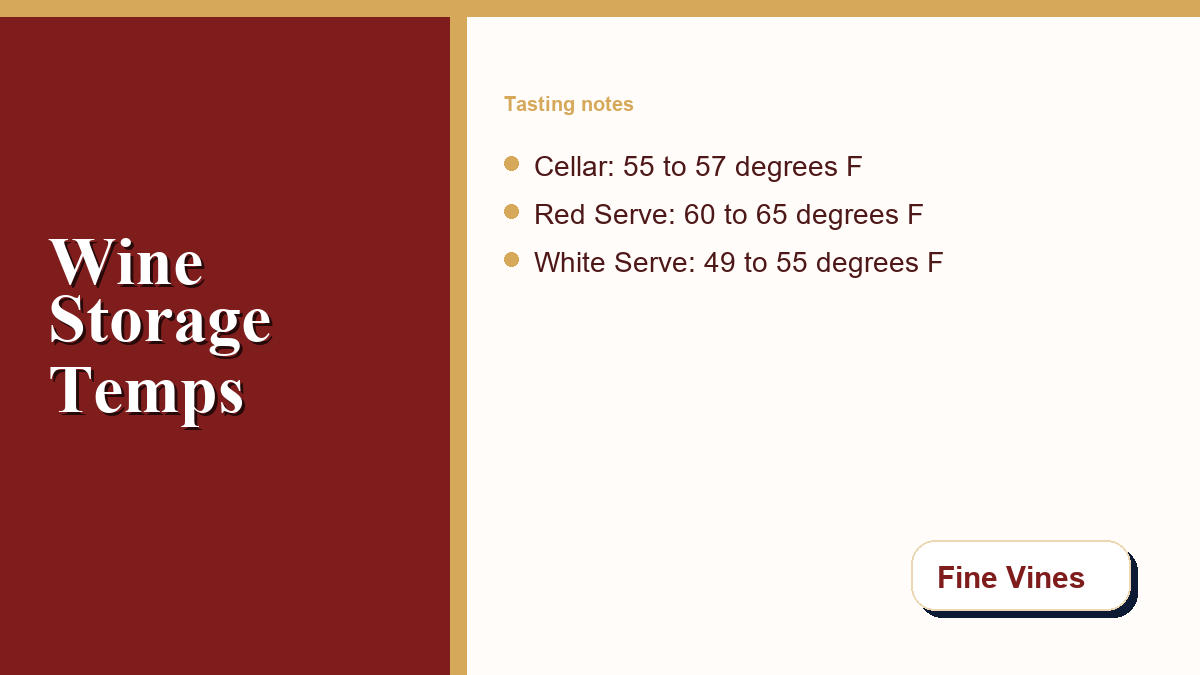
For long-term aging, all wines – red, white, rose, or sparkling – need a stable, cool environment. The usual cellar sweet spot is 55 degrees F to 57 degrees F (13 degrees C to 14 degrees C). In this range, chemical reactions occur at a controlled pace. If storage is too cold, aging slows; if too warm, reactions accelerate, causing flat flavors and premature aging.
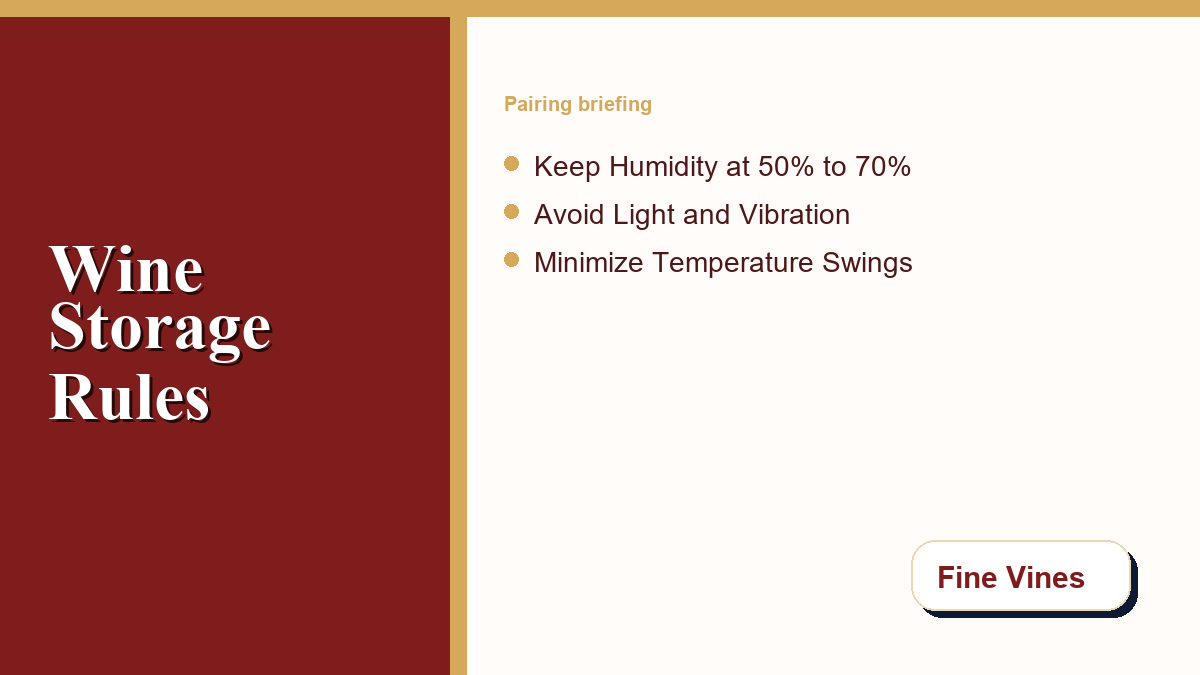
Equally important is wine cellar humidity, which is commonly kept around 50% to 70% for cork-finished bottles. Humidity helps prevent natural corks from drying out. A dry cork can shrink or crack, allowing oxygen to seep in and oxidize the wine, turning it flat or browned.
Avoid using a standard kitchen refrigerator for long-term cellaring. Kitchen fridges are designed for food safety, so they often run below 40 degrees F and have low humidity. That is fine for chilling a bottle before dinner, but it is not ideal for months of cork-finished storage. For storage beyond a few weeks, use a dedicated wine cooler, cellar, or consistently cool closet away from heat and light.
The Danger Zone: Short-Term Kitchen and Counter Risks
A common question is: Will wine spoil at 70 degrees?
Storing wine at 70 degrees F (21 degrees C) for a short period before serving will not automatically ruin it. However, long-term exposure to room temperatures above 70 degrees F accelerates aging. Over time, that warm environment can dull fresh aromas and create flat, cooked, or "stewed" flavors.
The risk increases above 80 degrees F (27 degrees C). Warmth causes liquid to expand, which can push against the cork and compromise the seal. Once the seal is damaged, oxygen exposure rises and wine quality can drop quickly.
While a constant 70 degrees F is not ideal, rapid temperature swings are often worse. Quick shifts – such as storing wine near a stove, on top of a refrigerator, or in a drafty pantry – cause the liquid to expand and contract repeatedly. That movement can stress the closure and speed oxidation. Prioritize consistency over finding the absolute coldest spot in your home.
Serving Temperatures: Getting the Most Out of Your Glass
Serving temperature is separate from storage temperature. While many wines age best near 55 degrees F, they show differently in the glass depending on style. Serving red wine at modern "room temperature" (often around 72 degrees F) is a misconception. The old room-temperature rule came from cooler homes, closer to cellar temperature than today’s heated rooms. Serving a complex red too warm can make alcohol feel hot and harsh, masking delicate fruit notes.
To get close without special equipment, use the practical 20/20 rule. Place red wines in the refrigerator for 20 minutes before serving, and take white wines out of the refrigerator 20 minutes before pouring.
For the best sensory experience, aim for these ranges:
- Red Wine Serving Temperature (60 degrees F to 65 degrees F / 15 degrees C to 18 degrees C): Useful for full-bodied reds like Cabernet Sauvignon, Merlot, and Syrah. Light, high-acid reds like Pinot Noir can be served slightly cooler (55 degrees F to 60 degrees F) to highlight bright red-fruit notes.
- White and Rose Serving Range (49 degrees F to 55 degrees F / 9 degrees C to 13 degrees C): Light whites such as Sauvignon Blanc and many roses should be chilled to preserve crisp acidity. Full-bodied, oaked whites such as Chardonnay are often better slightly warmer (53 degrees F to 55 degrees F) so texture and aroma are not muted.
- Sparkling Wine Serving Range (40 degrees F to 50 degrees F / 4 degrees C to 10 degrees C): Sparkling wines need cold temperatures to keep carbon dioxide dissolved, which helps bubbles remain tight and refreshing.
After the Cork Is Pulled: How Long Does Wine Last After Opening?
Once opened, oxygen begins interacting with wine. Initially, this can be useful, helping a wine "breathe." After several hours or days, however, oxidation degrades aroma, texture, and flavor. Wine can become flat, sour, nutty, or cardboard-like.
People often ask: Can I drink wine two weeks after opening? or Can I drink two-month-old opened wine?
From a quality perspective, two weeks is usually too long for ordinary table wine. If an opened bottle smells sharp, vinegary, musty, moldy, or otherwise unpleasant, discard it. When in doubt, especially with very old opened bottles, do not drink it. Even when spoilage is mainly a flavor issue, the wine will usually taste sour, flat, oxidized, or cardboard-like.
How long a bottle remains fresh after opening depends on several variables: wine style, closure type, fill level, oxygen exposure, and fridge temperature. Keeping open wine in the refrigerator is the best way to slow oxidation, even for red wines.
Here is a realistic breakdown of open-bottle longevity:
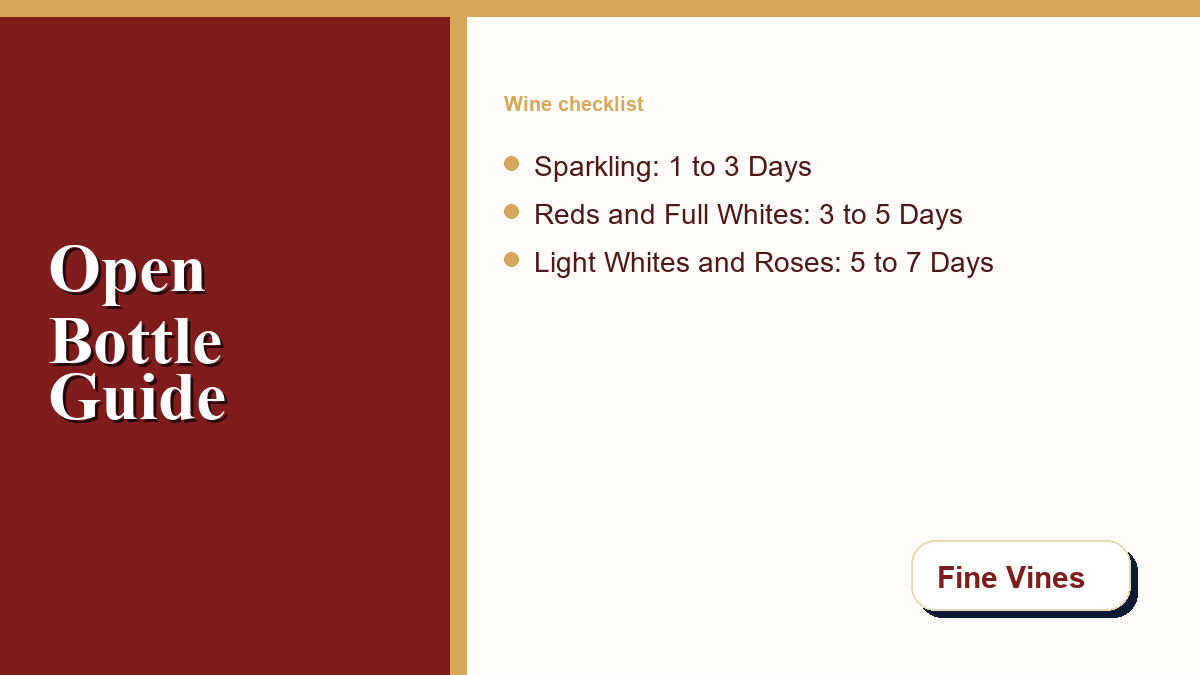
- Sparkling Wine (1 to 3 Days): Sparkling wines lose carbonation rapidly. Use a specialized stopper and keep the bottle cold in the fridge.
- Light White, Rose, and Sweet White (5 to 7 Days): With a tight cork or stopper, these can last up to a week in the refrigerator, as the cold slows oxidation.
- Full-Bodied White (3 to 5 Days): Oaked white wines, like Chardonnay, often oxidize faster than lighter whites because their style is more sensitive to oxygen exposure after opening. Enjoy them within three to five days.
- Red Wine (3 to 5 Days): Re-corked in the refrigerator, most reds keep for three to five days. High-tannin, high-acid reds such as Cabernet Sauvignon often resist oxidation better than low-tannin reds such as Pinot Noir. Warm them slightly before serving.
- Fortified Wine (Up to 28 Days): Port, Sherry, and Madeira have higher alcohol levels and more oxidative stability than ordinary table wine. Re-cork them and keep them cool and dark.
A Quick Practical Touch: How to Decant Wine
Decanting serves two purposes: aeration, which helps some wines open up, and filtration, which separates clear wine from sediment.
- Young Wines (Aged 1 to 5 Years): Young, tannic red wines can benefit from aeration. Pour the wine into a clean glass decanter or carafe and let it sit for 30 minutes to 2 hours, tasting occasionally so it does not lose freshness.
- Aged Wines (Aged 10+ Years): Older vintages often need gentle separation, not heavy aeration, because they can fade quickly. Stand the bottle upright for 24 to 48 hours before opening so sediment settles. Pour slowly into the decanter over a light source, and stop pouring as soon as dark sediment reaches the neck.
Temperature and Longevity Quick-Reference Guide
The table below summarizes useful temperatures and storage guidelines:
| Wine Category / Scenario | Target Temperature | Recommended Storing / Serving Practice | Ideal Longevity After Opening |
|---|---|---|---|
| Long-Term Storage (All Wines) | 55 degrees F to 57 degrees F (13 degrees C to 14 degrees C) | Dedicated wine cellar or cooler; 50% to 70% humidity. | N/A (Unopened) |
| Short-Term Counter Risk | 70 degrees F (21 degrees C) and above | Keep away from direct sunlight, appliances, and drafts. | N/A (Unopened) |
| Red Wine Serving Range | 60 degrees F to 65 degrees F (15 degrees C to 18 degrees C) | Place in fridge 20 minutes before serving. | 3 to 5 days, re-corked in fridge |
| White and Rose Serving Range | 49 degrees F to 55 degrees F (9 degrees C to 13 degrees C) | Light whites cold; fuller whites slightly warmer. | 5 to 7 days for many light whites |
| Sparkling Wine Serving Range | 40 degrees F to 50 degrees F (4 degrees C to 10 degrees C) | Serve well-chilled to maintain carbonation and bubbles. | 1 to 3 days with specialized stopper |
| Fortified Wines (Port, Sherry) | 55 degrees F to 65 degrees F (13 degrees C to 18 degrees C) | Serving temperature varies by style; store cool and dark. | Up to 28 days |
Responsible Appreciation and Conclusion
Understanding wine temperature improves the sensory enjoyment of each bottle. When hosting your next gathering, having the right essential wine tasting supplies for beginners helps you manage these conditions more easily.
If you are exploring new bottles, consider whether curated tasting boxes are worth it, since curated sets often include serving notes for each style. Applying these temperature rules can also elevate a couples tasting night at home or improve the way you approach pairing wine with traditional Indian dishes.
Wine appreciation is best enjoyed in moderation. A responsible approach to alcohol focuses on quality over quantity, exploring the nuances of flavor, terroir, and structure rather than consumption. By storing bottles carefully and serving them at the right temperature, you give each wine a better chance to show its intended aroma, texture, and balance.

0 Comments