Why Guest Communication Needs a Practical Plan
A tasting room or wine shop may receive reservation changes, private-event questions, accessibility requests, and general tasting inquiries through several channels. Without a shared process, a request can remain in one inbox after the responsible staff member changes shifts.
A practical tasting room reservation communication plan assigns each inquiry to a staff role, identifies the next checkpoint, and gives the team an approved fallback when one channel is unavailable. The purpose is not to promise an instant response. It is to reduce dropped handoffs, preserve the context the next person needs, and give guests a clear action they can take. For teams sorting reservation questions by type and next action, a lead scoring framework can make priority and ownership visible while the tasting room keeps availability and guest decisions with its staff.
Developing the Core Reservation Inquiry Matrix
For a busy tasting-room shift, a short inquiry matrix shows who should answer and what remains open. List each request type, its monitored channel, a staff owner, and the next checkpoint. Use the business’s actual coverage and reservation policy rather than promising the same turnaround for every guest.
For example, standard tasting reservations may begin with the front desk, while private-event inquiries or large group requests may need a hospitality or event owner. Defining those pathways reduces ambiguity and helps the appropriate role review requests that require more planning.
Below is an example of a compact operational table that outlines a basic inquiry matrix for daily operations:
| Inquiry Category | Primary Channel | Assigned Owner | Next Checkpoint |
|---|---|---|---|
| Standard Tasting | Website Booking / Email | Front Desk Staff | Confirm or route under the current reservation policy |
| Private Events | Direct Email Form | Hospitality Manager | Assign an event owner and confirm the next step |
| Large Group Tours | Phone / Email | Event Coordinator | Collect the minimum details needed for review |
| General Questions | Social Media / Email | Shift Supervisor | Answer or place in the named handoff queue |
Adapt the matrix to the business’s actual staffing and published policies. Add two fields to every open item: the current owner and the next checkpoint. At shift change, the outgoing team can review unresolved items, confirm the incoming owner, and close duplicates that arrived through more than one channel.
Duplicate detection matters because a guest may submit a web form and then call when no confirmation appears. Before creating a second reservation record, staff can search the approved system using the minimum identifiers required by policy. If the original request is found, update that conversation and note the new contact channel. If it is not found, create one request and tell the guest which channel will carry the next update.
The matrix should also define what “closed” means. A staff reply alone may not complete a date change, group request, or accessibility question. Close the item when the agreed action is recorded, the responsible role has what it needs, and any guest-facing next step has been sent through the approved channel.
Separating Reservation Requests From Confirmed Tastings
A preferred tasting time is only a request until the booking owner checks it. Keep three clear statuses in the handoff:
- Request received: The guest’s preferred experience, party size, and time are waiting for review.
- Waiting for staff confirmation: A named staff member is checking availability or a requested change. Do not describe the time as reserved.
- Confirmed: The approved reservation record contains the agreed date, time, party size, and tasting experience. The responsible staff member can now share those details with the guest.
At shift change, pass along the current status and the next person responsible. For a step-by-step way to distinguish request intake, a booking-page link, and staff confirmation, consult Messenger Bot’s appointment-request and human-confirmation guide. Use it as a planning checklist; a chat message does not itself reserve a tasting or prove that a calendar connection exists.
Disclosure: Fine Vines and Messenger Bot are under common ownership.
Establishing Clear Shift-Change Ownership
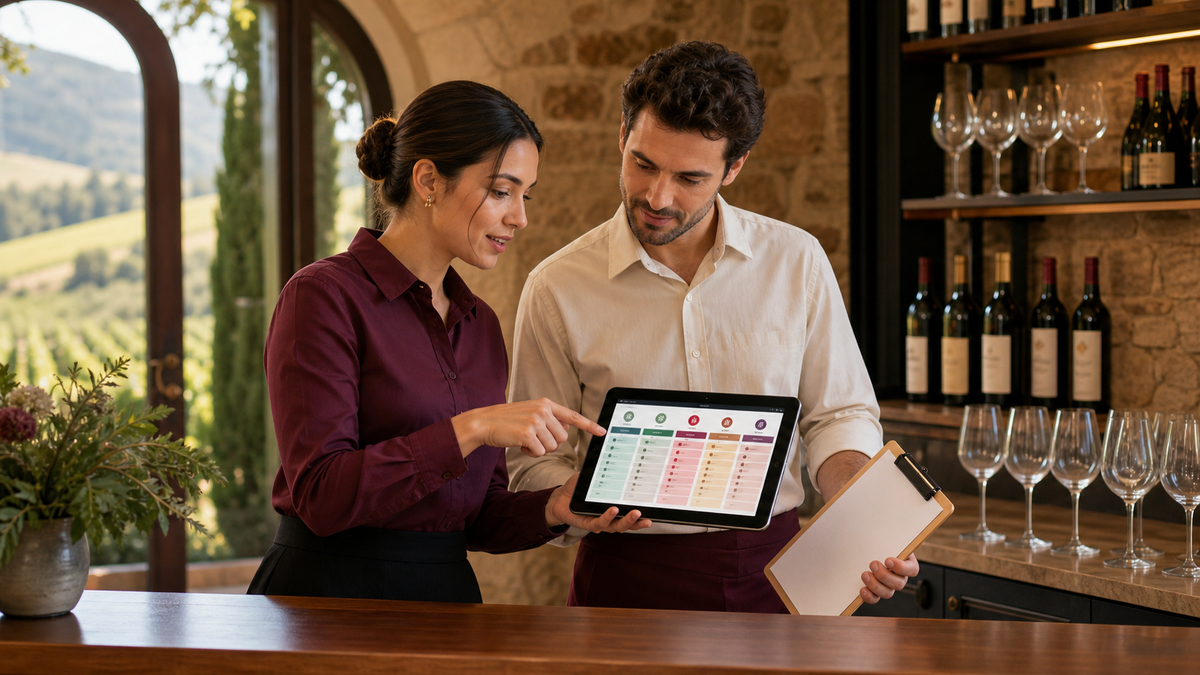
Shift changes are a common point for context to disappear. Use a short handoff in which the outgoing and incoming leads review the active inquiry queue, assign each open item once, and record the next action.
The handoff can highlight items such as:
- Urgent same-day reservation adjustments or cancellations
- Special dietary accommodations for upcoming groups
- Accessibility or seating requests that need a named owner
- Pending callbacks with an agreed next checkpoint
A shared, business-approved queue can make ownership visible without relying on a staff member’s personal account. Record only the context needed for the next action, and follow the business’s access and retention rules. “Event coordinator — waiting for date confirmation” is more useful than a note marked only “open.”
Use a small handoff record with consistent fields: request type, event or reservation date when relevant, current owner, last completed action, next checkpoint, and the approved channel in use. Avoid copying long message histories when the receiving staff member can review them in the established system. If an item has no owner at the end of the overlap, the shift lead should assign it before the outgoing team leaves.
Channel ownership should be explicit as well. One role may watch the general inbox, another may review private-event forms, and a supervisor may handle escalations. A channel without a named monitor can look available to guests while remaining invisible to staff.
Developing Fallback-Channel Decision Rules
Define fallback channels before a disruption. List the primary and secondary contact methods for routine reservations, event inquiries, and shift handoffs. Assign one role to confirm the issue, tell staff which fallback is active, and track conversations that still need a response.
If a guest says a message could not be sent on Messenger, staff do not need to diagnose every device or platform setting. Acknowledge the problem, ask only for the information needed to locate the inquiry, and direct the guest to the business-approved contact option shown on the tasting room’s website. When the original channel returns, reconcile the open queue before closing the incident.
For a broader disruption, keep one short internal incident note. Record the affected channel, when staff noticed the issue, the fallback in use, and the role responsible for checking recovery. Do not turn the incident note into a copy of guest conversations. A separate open-item list can track fixture identifiers or the minimum business-approved reference needed for follow-up.
When service returns, compare the fallback queue with the restored channel. Some guests may have completed their request by phone while the original message remained pending. Reconciliation prevents a second confirmation, duplicate event quote, or conflicting reservation change.
Implementing Privacy-Aware Handoffs
Reservation handoffs may involve contact details, accessibility needs, dietary preferences, or payment-related questions. Minimize that information in social messages and personal notes. Move account-specific discussion to the business-approved channel that fits the request, and follow the business’s privacy, access, and retention policies.
A useful handoff names the staff owner, the request category, and the next action without copying an entire guest conversation. Staff should avoid discussing private details where other visitors can hear them and should not move guest data to personal devices or unapproved tools.
Use fixture names and hypothetical scenarios in training. A test profile such as “Guest Alpha” lets the team practice routing and shift ownership without exposing a real reservation.
Identity checks should occur in the channel and manner the business has approved. A social message can direct the guest to call the published number or use the established booking flow rather than asking them to post additional personal details. If a guest prefers another supported channel, record that preference in the approved system and make the receiving role aware of it.
Review this handoff language with the person responsible for privacy and records procedures. The operating goal is simple: minimize unnecessary detail in the original thread, give the guest a clear next action, and ensure the receiving staff member knows what remains open.
Creating Template Governance for Consistency
Approved replies help a front-desk team explain current tasting options consistently. Give each template an owner, a source for changing facts, and a review date. Staff should adapt the wording to the guest’s question and hand off requests the template cannot settle.
Assign one role to maintain the approved response library. It can cover current hours, tasting options, group-request intake, accessibility questions, and channel disruptions. For educational questions, a reviewed template might direct readers to the site’s wine storage temperature guide without turning the reply into a sales claim.
Treat templates as adaptable starting points. Each should identify its audience, purpose, current source of truth, and escalation condition. Review the library on a cadence the business can support and retire outdated versions so staff are not choosing between conflicting instructions.
Give every template an owner and review date. Facts such as hours, tasting options, group limits, fees, and cancellation terms should come from the current business policy rather than an old message copied from a former employee. If the source of truth changes, update the template and remove the obsolete version from staff view.
Keep disruption templates especially modest. They can acknowledge the channel problem, name the approved alternative, and explain the next step without promising that the original platform will return at a particular time.
Running a 15-Minute Fixture-Only Drill
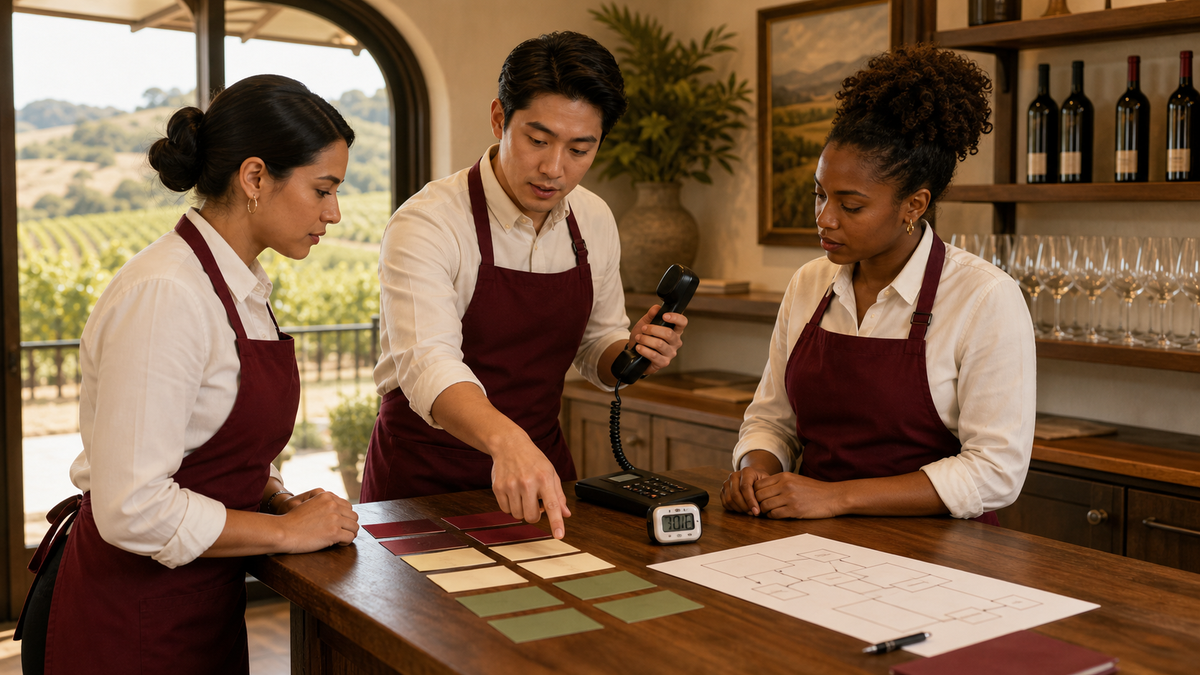
A brief fixture-only drill can test the plan without interrupting a full shift. The manager introduces a few simulated inquiries, such as “Guest Alpha needs to change a date” or “Event Beta arrived through an unavailable inbox.” The team routes each fixture through the matrix, assigns an owner, chooses a fallback, and prepares the shift handoff.
A 15-minute drill sequence
- Minutes 0–3: Introduce three fixture inquiries across different channels and identify the request category for each.
- Minutes 3–7: Assign one owner and one next checkpoint to every fixture. Flag any duplicate request.
- Minutes 7–11: Simulate one unavailable channel and move the affected fixture to the approved fallback.
- Minutes 11–15: Perform a shift handoff, score the checks, and assign any process repair.
Score observable checks: Was each fixture assigned once? Did staff choose a supported channel? Could the incoming shift understand the next action? Were public contact instructions current? Record each result as yes, no, or needs repair, then assign the repair an owner and due date. Do not use real guest details in the exercise.
Long-Term Planning and Practical Review Cadence
Choose a review cadence the tasting room can maintain. A quarterly check may suit a team with several channels, while a smaller operation may pair it with seasonal planning or staff training. Review the plan after a meaningful change in hours, staffing, reservation tools, or event offerings.
Use the review to inspect unresolved-item patterns, public contact links, staff feedback, and confusing request types. Update the matrix and templates when evidence shows a recurring handoff problem. If ownership is considering a transition, documented reservation and guest-follow-up procedures can also support broader wine shop exit planning by showing how day-to-day responsibilities are assigned.
Useful checks include the number of unassigned open items at shift change, duplicate requests discovered during reconciliation, broken public contact links, and process repairs still past due. These are operational signals, not promises about guest satisfaction or revenue. Track only what the team can define consistently and use the result to improve the next review.
Ensuring Continuous Hospitality Excellence
A usable reservation communication plan is specific enough to guide a busy shift and short enough for staff to consult. Define inquiry owners, record the next checkpoint, publish an approved fallback, minimize guest details, and test the handoff with fixtures. These steps will not prevent every channel problem, but they give the team a repeatable way to keep routine inquiries moving and tell guests what to do next.




0 Comments